When water gets into places it does not belong, it does not just leave things wet. It warps floors, buckles drywall, invites mold, and quietly undermines a home’s structure. Chicago homes face a unique mix of risks. Lake-effect storms push heavy rain in short bursts. Old clay sewer laterals and combined sewer systems can back up during downpours. Winter brings freeze-thaw cycles that split copper lines and stress foundations. If you own here long enough, you will meet water in one form or another. How you respond in the first hours largely determines the scope and cost of restoration.
I have walked into basements that looked like shallow pools after a spring storm, and kitchens that seemed fine until a toe caught on a cupped plank and told a different story. Water is equal parts obvious and sneaky. The obvious can be pumped and dried. The sneaky demands careful inspection, moisture meters, and patience.
Why speed matters more than anything
Water begins damaging materials immediately. Paper-faced drywall softens and sags within hours. Hardwood absorbs from the bottom up through the tongues and grooves, which is why boards cup. Insulation turns into a sponge that holds cold moisture against studs. By 24 to 48 hours, microbial growth can begin. That does not mean a house becomes hazardous at the stroke of hour 49, but it does mean mold prevention steps need to start on day one, not day four.
Chicago’s humidity can slow drying in summer and fool you in winter. A dry winter day feels crisp, yet the cold air that enters a wet space warms up and holds much more moisture. Without controlled dehumidification and airflow, that moisture settles into cavities. We have pulled baseboards two weeks after a pipe break and found surface-dry walls with damp, musty insulation behind them. Instruments, not guesswork, should guide the timeline.
The first hour after you find water
The exact order depends on safety and the source, but the logic is constant. Stop the water, make the area safe, preserve evidence for insurance, start controlled removal.
Here is a quick, field-tested checklist you can use the moment you discover a leak or flood:
- Kill the source. Close the main water valve for supply leaks, or call the city/plumber if you cannot reach it. For sewer backups, avoid flushing or draining anything. Make it safe. If outlets or appliances are wet, shut off power to the affected circuits at the panel. Do not step into standing water with live electricity. Protect what you can. Move rugs, art, paper goods, and electronics to a dry space. Put aluminum foil or plastic lids under furniture legs to prevent staining. Document before you touch much. Take wide room shots, then close-ups, and note water lines on walls or furniture. This helps with claims alignment later. Start controlled extraction. Wet vacs can help for shallow water. If water keeps appearing, do not chase it all day. That points to hidden intrusion that needs professional extraction and monitoring.
That list is short on purpose. Anything more complex belongs to trained crews with the equipment to remove water quickly without pushing moisture deeper into the structure.
What you can expect from a professional restoration workflow
Different companies use different terms, but the process maps to four phases: assessment, extraction, stabilization, and rebuild. Each step has a few Chicago-specific wrinkles.
Assessment sets the baseline. Technicians will use moisture meters and thermal imaging to trace water migration. In balloon-framed homes common in older Chicago neighborhoods, water can travel down wall cavities into base plates and out across floors. A good assessor will draw a perimeter with blue tape and note moisture readings by surface. This does not just guide work. It also gives your insurer a clear picture of the scope.
Extraction is the 80/20 move. Remove as much water as possible in the first visit. Truck-mounted extractors pull far more than a shop vac. In finished basements with carpet over pad, a crew can do weighted extraction to squeeze water from the pad. In many cases, the pad is discarded to speed drying and prevent odor. For standing water more than a few inches, submersible pumps move it out efficiently. If you have a combined sewer backup, contaminated water protocols apply, which changes how materials are handled and what can be saved.
Stabilization includes controlled demolition, drying, and antimicrobial measures. Controlled demo sounds dramatic, but it is usually precise: baseboards off, a strip cut at the base of drywall to vent cavities, toe kicks removed in kitchens to get airflow under cabinets. Industrial dehumidifiers and air movers create a drying system. Airflow is aimed to move moist air off surfaces and toward dehumidifiers, not to blast spores around. Antimicrobial application is targeted, not indiscriminate spraying, aimed at materials that stayed wet long enough to warrant it.
Rebuild closes the loop. Once drying logs show materials at target moisture, repairs begin. That might be new drywall and paint, baseboards, refinished or replaced flooring, cabinets reinstalled or remade. Good restoration teams coordinate this cleanly so you are not waiting weeks between dry-out and finish work.
How Revive 360 Renovations approaches complex water losses
On multi-room losses with mixed finishes, sequencing makes or breaks the schedule. At Revive 360 Renovations, our project managers build a 10 to 14 day plan for moderate clean water events. Day one focuses on extraction and opening cavities. Day two sets up a stable drying system and verifies airflow patterns with smoke pencils and readings. Days three to five are about monitoring and adjustments. Once wood subfloors return to acceptable moisture content, we pivot to repairs without a long gap.
We have learned to prioritize surfaces that affect daily life. Kitchens get attention ahead of guest bedrooms, even if both are wet, because a functioning sink and a safe cooking zone lower stress and reduce the urge to cut corners. Floors are a special case. If we can save original hardwood by panelizing air movement under protective poly and using floor mat systems, we will. If readings show the boards will not flatten or the subfloor stayed wet too long, we recommend replacement to avoid chronic cupping and mold in seams.
Categories of water and why they matter
Insurers and restoration standards describe three broad categories based on contamination risk.
Category 1 is clean water from supply lines or rain that has not contacted dirty surfaces. You can often dry and save more materials in this scenario. Time still matters, because clean water does not stay clean in a warm environment.
Category 2 is gray water with significant contamination, like dishwasher discharge, washing machine overflow, or a sump pit overflow. Soft materials that are hard to fully clean, like saturated carpet pad or particleboard, usually have to be replaced.
Category 3 is black water from sewers, river overflow, or ground water that carried in soil and organic material. This requires strong containment, PPE, and removal of porous finishes that got wet. Chicago’s combined sewers make category 3 events more common during heavy rain. No one likes the disposal, but removing and rebuilding beats living with bacteria and persistent odor.
Hidden paths: flat roofs, parapets, and sneaky leaks
Chicago’s two-flats and greystones often have low-slope roofs and parapet walls. Water that enters through a failed flashing or cracked coping stone can travel inside a masonry wythe and show up as a blister in a second-floor bedroom weeks later. I have traced a faint ceiling stain back to an inch-long split in a counterflashing that faced south and baked all summer. Interior restoration handles the symptom. Someone still has to fix the building envelope. If a restoration contractor tells you it is fine to patch and paint without investigating the source, press for a better plan.
Drying hardwood floors without turning them into firewood
Saturated hardwood can sometimes be saved, but it is not a simple yes or no. Species, age, plank width, finish, and how long the boards stayed wet all matter. Oak has a fighting chance. Maple is less forgiving. Wider planks move more and may show cupping longer.
We have had success using panelized tenting, where we create a microclimate above the floor with plastic and pull dry air through mat hoses. Subfloor readings guide the pace. If you dry the top too fast while the underside stays wet, the board deforms. The goal is even drying and patience. After the moisture content stabilizes, give the floor a few weeks before sanding. Sanding a floor that is still acclimating can lock in waves.
If the floor cannot be saved, consider whether adjacent spaces provide a seam. Threshold transitions can avoid replacing a whole level. If you were already thinking about new finishes, this is where knowledge from The Best Tile Options for High-Traffic Areas in Chicago Homes or Luxury Vinyl Plank vs. Hardwood comes in handy. LVP, while not the same as oak, tolerates occasional moisture better in basements and garden units.
Kitchens, cabinets, and wet toe kicks
Kitchen water events are common and emotionally charged. A supply line to a refrigerator or dishwasher fails, and suddenly toe kicks are saturated. Cabinet boxes made of plywood fare better than particleboard. The question becomes repair, refinish, or replace.
We have removed toe kicks and drilled discreet holes to move dry air under runs of cabinets with good results. If cabinet boxes remain sound, you might choose to refresh the kitchen during rebuild. Some homeowners pivot to Kitchen Cabinet Refacing: Save Money Without Sacrificing Style. Others see it as the moment to evaluate Kitchen Cabinet Painting vs. Replacement: What’s Right for You? That decision sits at the intersection of water damage scope, insurance allowances, and your long-term plans. A well-handled restoration can dovetail with updates without ballooning time, but you need a team that manages both streams without losing the thread.
Basements, sump pumps, and backups
Chicago basements are full of stories. Clay drain tiles, older sump setups, and garden units close to grade increase water risk. After a heavy storm, a sump pump that is slightly undersized can run continuously, heat up, and fail. A simple redundancy, like a battery backup pump, prevents that midnight surprise. If water still gets in, the remediation plan depends on the source. Groundwater intrusion through a crack is one thing. A combined sewer backup is another, with stricter sanitation and disposal.
After a basement event, many homeowners ask about Basement Waterproofing: Protecting Your Chicago Home from Flooding. Exterior grading, gutter downspout extensions, and interior drain systems vary in cost and disruption. The right answer depends on soil, foundation type, and neighborhood sewer behavior. I have seen downspout extensions that cost less than dinner fix 80 percent of a problem, and I have seen deep drain tile systems that were the only credible fix.
Mold prevention and when to test
Mold spores exist everywhere, waiting for the right mix of moisture, food, and time. The best remediation is prevention. Fast extraction, controlled drying, and removing materials that will not dry quickly block mold before it gains a foothold.
If you suspect growth, or if the water sat longer than 48 to 72 hours, a focused remediation plan helps. Not every case requires Mold Testing: When Should You Call the Experts? Testing makes sense when occupants have sensitivities, when there is a dispute about scope, or when clearance documentation is needed after significant growth. A good remediation plan includes containment, negative air, removal of contaminated porous materials, and cleaning protocols for semi-porous and non-porous surfaces. Then it hands the space back to drying and rebuild.
Insurance, documentation, and the rhythm of a claim
Most Chicago homeowners policies cover sudden and accidental water damage, but not seepage over time or groundwater flooding without a separate policy or endorsement. Sewer backups often require a rider. When you file a claim, the adjuster looks for cause, extent, and reasonableness of the restoration plan.
You can set yourself up for fewer headaches with clear documentation. Take photos before and after extraction. Keep a log of dates, readings, and equipment. Save receipts for emergency work and temporary living costs if the home becomes uninhabitable. Reasonable mitigation, like prompt water extraction and drying, is expected. Skipping mitigation because you are waiting to hear from an adjuster can work against coverage.
At Revive 360 Renovations, our site leads create moisture maps and daily logs that slot neatly into claim files. The goal is not to inflate scope. It is to show the logic from source to solution so you and your insurer see the same picture. On contested items, data wins over adjectives.
Health and safety in older Chicago homes
Many pre-1978 houses contain lead paint, and some mid-century homes have asbestos-containing materials in floor tiles, mastics, or pipe insulation. Water damage can disturb these materials. If a drying plan includes sanding paint or removing old flooring, pause for assessment. Lead-safe practices and, where indicated, asbestos testing keep crews and occupants safe. This does not mean your project will grind to a halt. It means the sequence will be adjusted to handle hazardous materials under the right protocols.
Sewer backups add a sanitary layer to safety. PPE, including gloves, boots, and respirators in some scenarios, keeps contaminants from moving around the home. Porous items that got wet with contaminated water, like stuffed furniture or area rugs, should be considered total loss. That is a hard call, but it avoids lingering odor and health concerns.
Drying metrics you can understand
Restoration reports can feel dense. Three numbers help you track real progress.
First, ambient conditions. Temperature and relative humidity define how much moisture the air can carry. Technicians adjust dehumidifiers and air movers to find the sweet spot.
Second, surface moisture in key materials. Drywall, solid wood, subfloors, and studs each have target moisture ranges. For example, a typical kiln-dried stud might read 10 to 12 percent moisture in a healthy home. A soaked stud can sit above 20 percent. The trend matters more than a single reading.
Third, grain depression or specific humidity drop across a dehumidifier. That tells you the equipment is removing moisture from the air, not just making noise.
Ask for the numbers in plain English. You are not being picky. You are being a responsible owner.
Repair choices that age well
Not every wet surface needs to go back exactly as it was. Basements that flood more than once benefit from finishes that tolerate water. If you have repeatedly wet carpet in a below-grade family room, switching to tile or a luxury vinyl plank, and putting area rugs on top, saves grief later. For walls, consider using paperless drywall in moisture-prone areas. In laundry rooms, add a drain pan under the washer and braided stainless supply lines.
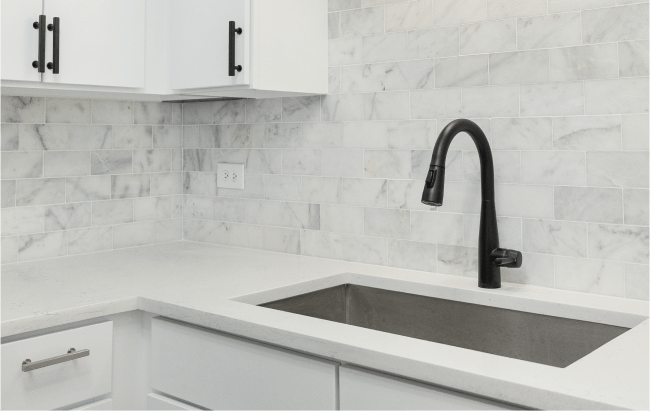
If a kitchen took the hit and you already planned updates, restoration can dovetail with design choices. A water event that forces new counters might accelerate research like How to Choose the Perfect Kitchen Countertop Material for Your Home or Thinscape Countertops: A Modern Alternative to Traditional Stone. If cabinets survived but look tired, Cabinet Painting vs. Staining: Which Is Better? offers a practical refresh without tearing out sound boxes. Restoration is not a remodeling plan, but the overlap is real. Just separate insurance-related scope from elective upgrades to keep paperwork clean.
What Revive 360 Renovations looks for during monitoring
Daily monitoring is not a quick peek and a thumbs-up. Our teams at Revive 360 Renovations follow a predictable routine. Start at the perimeter where readings were highest, then move inward. Pull one baseboard or trim piece in a test area to verify cavity conditions if the numbers plateau. Adjust air mover angles so they do not create dead zones. Check under cabinets and behind appliances with pin-type meters, not just infrared, which reads surface temperature patterns that can mislead in a cold corner.
When numbers stall, we look for insulation holding moisture in place, vapor barriers trapping humidity, or simple physics like cold concrete in contact with humid air. Sometimes the fix is as basic as gently warming a space to encourage evaporation while keeping dehumidification in step. Other times, a controlled cut opens a stubborn cavity. We do not like unnecessary demolition any more than you do, but we dislike hidden mold even more.
Timelines that reflect reality
A straightforward clean water event in one or two rooms can reach dry standards in three to five days. Add a finished basement, saturated insulation, or a Chicago February with low ambient temperatures, and drying might stretch to a week or more. Demo and rebuild vary with materials and availability. Drywall patches and paint add a few days. Custom millwork or reflooring with acclimation can extend into a couple of weeks. The fastest projects share a theme. Decisions happen quickly, trades are coordinated, and surprises are handled with information rather than delay.
When DIY helps and when it hurts
Plenty of owners can safely handle early steps. Shutting off water, mopping, moving belongings, and even running box fans to keep air from stagnating all help. Where DIY crosses into risk is hidden moisture and contaminated water. Pulling baseboards without a plan can rip finishes and release dust you would rather not breathe. Running heat without dehumidification can drive moisture into framing. Spraying bleach on porous materials, like drywall, gives a false sense of progress. On non-porous surfaces, bleach can be appropriate. On cellulose-based materials, it does not fix the root problem.
Think of your effort as triage and preservation. The structural drying system, cavity ventilation, and documentation cadence are where professionals earn their keep.
Edge cases and judgment calls
Every house throws a curveball now and then. A floating engineered wood floor over a foam underlayment can trap water that will not show up at the surface. You might find an unexpected lead drum trap below a tub where you planned to cut. A radiant-heated slab complicates drilling or nailing and changes how you move air. On a January loss, venting large amounts of moist air outdoors might create ice at exit points, which drips back in once things warm. Good teams think two moves ahead and adjust.
We handled a South Loop condo where a small supply line leak soaked a closet and bled under a wall into a neighbor’s unit. The HOA wanted no visible demo in common areas. We set up containment, used low-profile wall cavity drying with vacuum panels, and worked after hours to reduce hallway disruption. The moisture maps looked like a Tetris board by the end, but both units reached dry standards without a single full wall removal.
Preventive steps that actually move the needle
Not every loss is avoidable, but a short list reduces risk meaningfully.
- Replace rubber washing machine hoses with braided stainless every 5 to 7 years, and add a pan and leak sensor. Insulate pipes in exterior walls and unheated spaces, and keep cabinet doors open during deep freezes to let warm air in. Maintain your sump pump, test it quarterly, add a battery backup, and keep downspouts discharging at least 6 feet from the foundation. Seal and maintain roof flashings and parapets, and clear gutters before fall and spring storm seasons. Install smart leak sensors under sinks, behind refrigerators, and near water heaters. The earlier the alert, the smaller the damage.
These are not theory. They represent the patterns we see again and again.
After the dust settles
Restoration ends when your home is dry, clean, and rebuilt. The story is not complete until you understand what failed and what changed to prevent a repeat. Ask for final moisture readings and a summary of work. Note any upgrades or material choices that improve resilience. If insurance covered the loss, keep your documentation handy. If you made elective improvements alongside necessary repairs, track the costs separately, especially if you factor them into future decisions like The Cost of Painting a House in Chicago https://www.reviverenovations.com/ or a Small Bathroom Remodel.
Water finds weaknesses. A homeowner who has lived through one event tends to spot the next risk early. If you have already walked that path, you also know the value of a calm, methodical response. Teams like Revive 360 Renovations exist not just to show up with fans and dehumidifiers, but to orchestrate a process that respects your home and your time. That means aligning technical restoration with everyday life, communicating in plain language, and making smart choices when the route forks.
If you take nothing else from this guide, take this. Act quickly, measure rather than guess, and favor solutions that hold up in February as well as July. Chicago will give your home four seasons of tests. With the right plan, water does not get to write the final chapter.